
One of many simpler traps to fall into with know-how is pondering that uncooked efficiency is at all times the answer. Clearly, that is true in some circumstances. In case your five-year-old PC is combating new video games, likelihood is, a sooner CPU and graphics card will repair that.
Wi-Fi, nonetheless, is proof-positive that merely being able to go sooner will not essentially get you there any faster. Typically it is not even about pace, however crossing the end line in any respect, and with the ability to do it each time. I am being a bit obtuse right here, however all the things will make extra sense as I clarify the historical past of my woes.
A collection of unlucky occasions
And the teachings realized
After I moved into my first residence in Austin, I purchased a standalone router with 802.11ac, what’s now dubbed Wi-Fi 5. And it was tremendous. For probably the most half, the one issues that wanted to connect with it had been a PC, a TV, a telephone, and later, an iPad. I would typically join devices I acquired for evaluate, however nothing very demanding. Issues remained tremendous after my now-wife moved in, and the pair of us relocated to different residences within the metropolis.
Issues turned south on the Wi-Fi entrance after we purchased our first home. It was solely a two-floor townhouse, however a lot bigger than an residence. All of a sudden, there have been areas the place the previous router simply could not attain reliably, or in any respect. Protection stopped shortly past our back and front doorways, by no means thoughts reaching the indifferent storage. You’d lose sign in our tiny yard.
Across the identical time, I began reviewing smart home equipment like gentle bulbs, good audio system, and robotic vacuums. After some time, I seen that a few of these equipment had been dropping offline often, notably on Apple’s notoriously fickle HomeKit platform. I noticed {that a} community improve was so as, and to me the apparent resolution was the burgeoning class of mesh routers. For each value and ease causes, I went with a Google Nest Wifi.
The mix of my private units, my spouse’s, and a flood of good house equipment was overwhelming Wi-Fi 5’s connection limits, forcing it to kick lesser-used objects offline.
This did certainly enhance vary considerably — however units nonetheless saved dropping. If something, the issue saved getting worse because the variety of good house equipment mounted.
Someday later, I lastly acknowledged what the issue was: Wi-Fi 5. Not its pace, although. Quite, it is that the usual can solely deal with a small variety of simultaneous connections. The mix of my private units, my spouse’s, and a flood of good house equipment was overwhelming its capability, forcing it to kick lesser-used objects offline. An iPhone or desktop PC is consistently renewing its connection standing — a light-weight bulb or a water management system is just checking in periodically.
By the point I took my household again to Canada in 2022, I would made my thoughts as much as improve to a Wi-Fi 6E mesh system. I ended up going with the Eero Professional 6E, which has usually been way more dependable, because of the basically extra environment friendly structure of Wi-Fi 6. I have never completely escaped the problem of unresponsive equipment, but it surely occurs far much less usually, and is often attributable to a selected product misbehaving as an alternative of a router.
A couple of extra classes
The superior curriculum

There was nonetheless room for enchancment. For one factor, I typically bumped into ping (lag) and stability points with on-line video games like PUBG, regardless of a kind of Eeros sitting just a few ft away from my laptop computer, and each of them supporting Wi-Fi 6E’s ultra-fast 6GHz band. Finally, I turned irritated sufficient that I lastly received round to connecting an Ethernet cable, and I used to be really a bit shocked at how a lot of an enchancment it was. All I can collect is that one thing was inflicting interference — or a minimum of, the sign was fluctuating sufficient to trigger drops in bandwidth. The lesson was that Ethernet is at all times, at all times the way in which to go once you want a connection to be bulletproof, irrespective of how briskly your Wi-Fi is meant to be.
One thing I found accidentally is that if it is an choice in your router mannequin, you need to most likely allow SQM, brief for Sensible Queue Administration. There is a extra technical rationalization of what that does, however the brief model is that it prioritizes sure sorts of community visitors, akin to gaming, video streaming, and VoIP/video calls. The impact of this was a bit subtler than plugging in Ethernet — however, I felt idiotic for not attempting it earlier. I simply want that extra routers had the specs to help SQM’s necessities. It must be on by default, for my part.
College’s not over but
Methods I may make issues higher

Realizing my historical past with networking (and different facets of life, actually), I am certain there’s extra I can do. In the meanwhile, the one units I’ve plugged into Ethernet are my laptop computer and a Philips Hue hub for my lights. Though nothing else has actually demanded that stage of reliability, I would not be stunned if my Apple TV 4Ks began loading movies immediately, or my spouse’s media server scaled up its transcoding high quality.
Additionally, I am one thing of a hypocrite on the subject of router placement. I do know that the perfect place to take a seat a router for vary is off the ground, away from obstacles, and as near the middle of a room as potential, however I have never gone out of my approach to make that occur, and our bed room router is definitely sitting on the carpet. This does not appear to be affecting something, fortunately. It is merely sub-optimal.
Even a vanilla Wi-Fi 6 router may carry out higher than you anticipate for those who take steps to cope with its protection, reliability, and prioritization.
In some unspecified time in the future, I’ll crack and improve to Wi-Fi 7. That provides issues like Multi-Hyperlink Operation — the flexibility for units to take advantage of a number of bands concurrently — and wider information channels usually, as much as 320MHz. There is no rush in the intervening time, principally as a result of so few units in my house are literally suitable with the protocol, and something that helps 6E’s 5 and 6GHz bands has loads to work with. The writing is on the wall, nonetheless. In some unspecified time in the future, AR/VR glasses will transition from a distinct segment curiosity to the mainstream, and we’ll all need the very best bandwidth to stream alternate realities with out movement illness or breaking the phantasm. If nothing else, I would like my simulated movie show to be clean as glass.
Within the meantime, you may see for those who can keep away from spending tons of of {dollars} by studying from my errors. Even a vanilla Wi-Fi 6 router may carry out higher than you anticipate for those who take steps to cope with its protection, reliability, and prioritization.
Trending Merchandise

H602 Gaming ATX PC Case, Mid-Tower ...

Dell SE2422HX Monitor – 24 in...
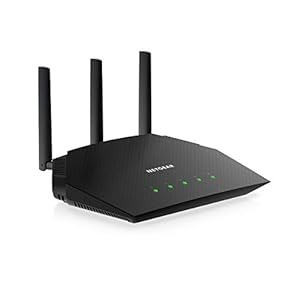
NETGEAR 4-Stream WiFi 6 Router (R67...

AOC 22B2HM2 22″ Full HD (1920...

Logitech Wave Keys MK670 Combo, Wi-...

SAMSUNG 34″ ViewFinity S50GC ...
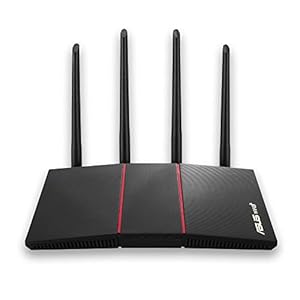
ASUS RT-AX55 AX1800 Twin Band WiFi ...

Sceptre 22 inch 75Hz 1080P LED Moni...
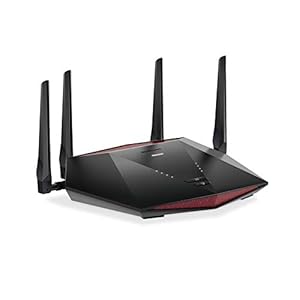
NETGEAR Nighthawk Professional Gami...