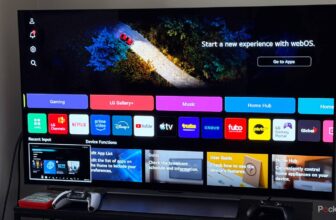
One thing I discover mildly comforting is that in an age when persons are inspired to switch their phone, fitness tracker, or laptop each three years — if not quicker — TVs have not succumbed to the identical sample. Within the US, folks usually hold a TV for effectively over 5 years, and generally as much as a decade or extra. You could find yourself holding onto yours longer than your automotive.
The commonest TV format at present is the LCD, geared up with LED backlights. There are just a few variants of this, resembling QLED and mini-LED, however all of them share the identical basic expertise. How lengthy are you able to count on an LCD/LED TV to final? The reply is mostly encouraging, however not essentially an enormous benefit over OLED besides underneath sure circumstances.
How lengthy will my LED TV final?
Breakdowns, obsolescence, and different elements
When it comes to longevity earlier than failure, there is not any particular quantity, and even broad estimates differ wildly. The weak level in any LCD is its LED backlights, owing to put on brought on by warmth. Reviewed claims that on common, an LCD ought to final 40,000 to 60,000 hours when working at most (or near-maximum) brightness. That interprets into 4.5 to six.8 years of steady viewing, however after all most individuals do not go away a TV on 24/7, not to mention with brightness cranked as excessive as attainable. That implies that in calendar years, you’ll be able to in all probability count on LCDs to final over a decade, barring defects or fluke incidents.
That raises one other subject although, which is construct high quality. A high-end LCD is liable to last more than a funds mannequin, and certainly Samsung claims that its QLED TVs ought to function for 70,000 to 100,000 hours — roughly 8 to 11 years repeatedly. In sensible phrases, that is so lengthy that reliability is sort of irrelevant, except maybe you are hoping at hand a TV all the way down to your baby.
The true motive I say “virtually” is as a result of there are different methods wherein an LCD can break down. Issues with the remainder of the show panel might end in useless pixels or visible artifacts. There’s additionally the potential for port or processor failures, although I’ve by no means heard any anecdotes alongside these traces.
An LCD ought to supply not less than 4.5 to six.8 years of steady viewing, however after all most individuals do not go away a TV on 24/7, not to mention with brightness cranked as excessive as attainable.
Arguably, extra vital than sturdiness is obsolescence. There is a respectable probability that in the event you purchased a TV in 2011, it might nonetheless be working at present, however it will be a 720p or 1080p set with out HDR (excessive dynamic vary), and even HDMI 2.0 ports, that are quickly being changed by HDMI 2.1 and a pair of.2. You would be lacking out on main options resembling 4K and high refresh rates. You’d even be caught with an outdated software program interface that will basically drive you to purchase an add-on media streamer, because the TV’s proprietary apps could have lengthy been deserted.
Most TVs now run on widespread software program platforms like Google TV, Hearth TV, or Roku OS. Although that ensures higher help, it is not infinite. Sooner or later, your TV’s processor can be thought-about too sluggish to maintain up with newer options and app updates. So whereas your TV would possibly proceed to work, some apps won’t, as soon as once more nudging you into changing your set or shopping for an add-on streamer.
The excellent news on this entrance is that corporations aren’t leaving us twisting within the wind, not less than not as shortly as they do within the telephone world. A Roku TV from 2014 ought to nonetheless be capable to replace to Roku OS 15, the newest model. Issues are much less steady for Hearth- and Google-based units — Google TV solely premiered in 2020, and Hearth TV is transitioning to a badly-needed redesign — however the odds are that one thing you purchase at present will get updates for 5 years or extra. Heck, some telephones are getting guarantees of longer replace cycles.
How does LCD/LED examine to OLED?
An advanced relationship

Regardless of its title, OLED operates very otherwise from an LCD. There are no LED backlights — as an alternative, each pixel is self-illuminating, which is what permits OLED’s extraordinarily exact colour and distinction. It is thought-about the gold normal for visible constancy, not less than for these of us who do not have tens of hundreds of {dollars} to drop on state-of-the-art Micro LED expertise.
Having fewer components is helpful, however issues come up from the “O” a part of OLED, which refers to an natural electroluminescent layer. This tends to degrade quicker than the artificial content material in LCDs, and that course of can speed up underneath heavy utilization. So whereas an OLED TV would possibly theoretically run for as much as 100,000 hours, some fashions would possibly final as little as 30,000. That is nonetheless fairly good, virtually talking. You’d must run a low-end TV for 8 hours a day, every single day to kill it in 10 calendar years.
Trendy OLEDs use a wide range of measures to attempt to counteract burn-in, resembling pixel shifting and dimming the brightness of logos, however the risk nonetheless exists.
That is ignoring a few different points, nonetheless, essentially the most important being burn-in. That is brought on by some pixels degrading quicker than others when static parts are left onscreen for a very long time. Trendy OLEDs use a wide range of measures to attempt to counteract this, resembling pixel shifting and dimming the brightness of logos, however the risk nonetheless exists. You could find yourself changing an OLED effectively earlier than the 10-year mark if burn-in “ghosts” develop into too noticeable to disregard.
The opposite downside is brightness discount. You in all probability will not discover for some time, since TVs can ramp up their energy use to compensate, however finally there can be a visual distinction versus whenever you first purchased your set. LCDs can fall prey to weakening backlights earlier than they fail outright, to be truthful.
Do you have to select an LCD/LED or OLED for longevity?
An more and more irrelevant distinction

Strictly talking, an LCD is the safer wager. Though each LCDs and OLEDs can doubtlessly final over a decade, the chance of burn-in with OLEDs is actual, particularly in the event you spend lengthy hours gaming on them or utilizing them as PC screens. You’ll be able to stretch issues out by adopting sure habits, like turning your TV off everytime you go away the room, however there’s solely a lot these and built-in countermeasures can do.
Know-how retains evolving, so by the point OLED burn-in turns into an element, you is perhaps trying to transfer on for different causes anyway.
That stated, the 2 codecs are equally weak to {hardware} and software program obsolescence. Know-how retains evolving, so by the point OLED burn-in turns into an element, you is perhaps trying to transfer on for different causes anyway. Who is aware of, perhaps we’ll lastly get reasonably priced 8K TVs.
In the end LCD and OLED will in all probability give solution to Micro LED. By 2030, you could not even care about proudly owning a TV — corporations like Apple, Meta, and Samsung are racing to develop extra reasonably priced and compact AR glasses. Past the social side, there’s not a lot level splurging on a 75-inch TV when you’ll be able to simulate a theater-sized display anyplace you go.
Trending Merchandise

H602 Gaming ATX PC Case, Mid-Tower ...

Dell SE2422HX Monitor – 24 in...
NETGEAR 4-Stream WiFi 6 Router (R67...
AOC 22B2HM2 22″ Full HD (1920...
Logitech Wave Keys MK670 Combo, Wi-...
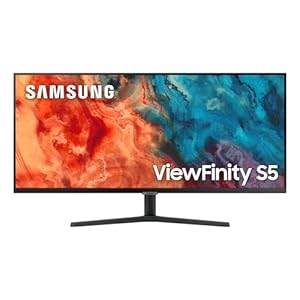
SAMSUNG 34″ ViewFinity S50GC ...
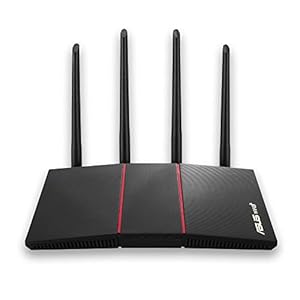
ASUS RT-AX55 AX1800 Twin Band WiFi ...
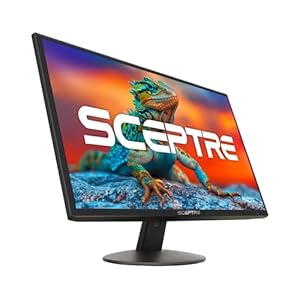
Sceptre 22 inch 75Hz 1080P LED Moni...
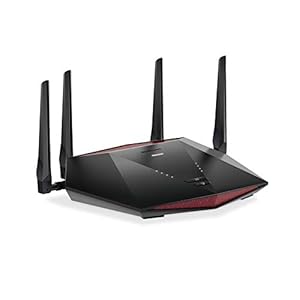
NETGEAR Nighthawk Professional Gami...